|
This was SUCH a joy! A little bit of history too, as, in being inducted as the Minister-in-Placement at the Pitt Street Uniting Church in Sydney, I became the first transgender person to be called and inducted into ministry in a Christian Church in Australia.
0 Comments
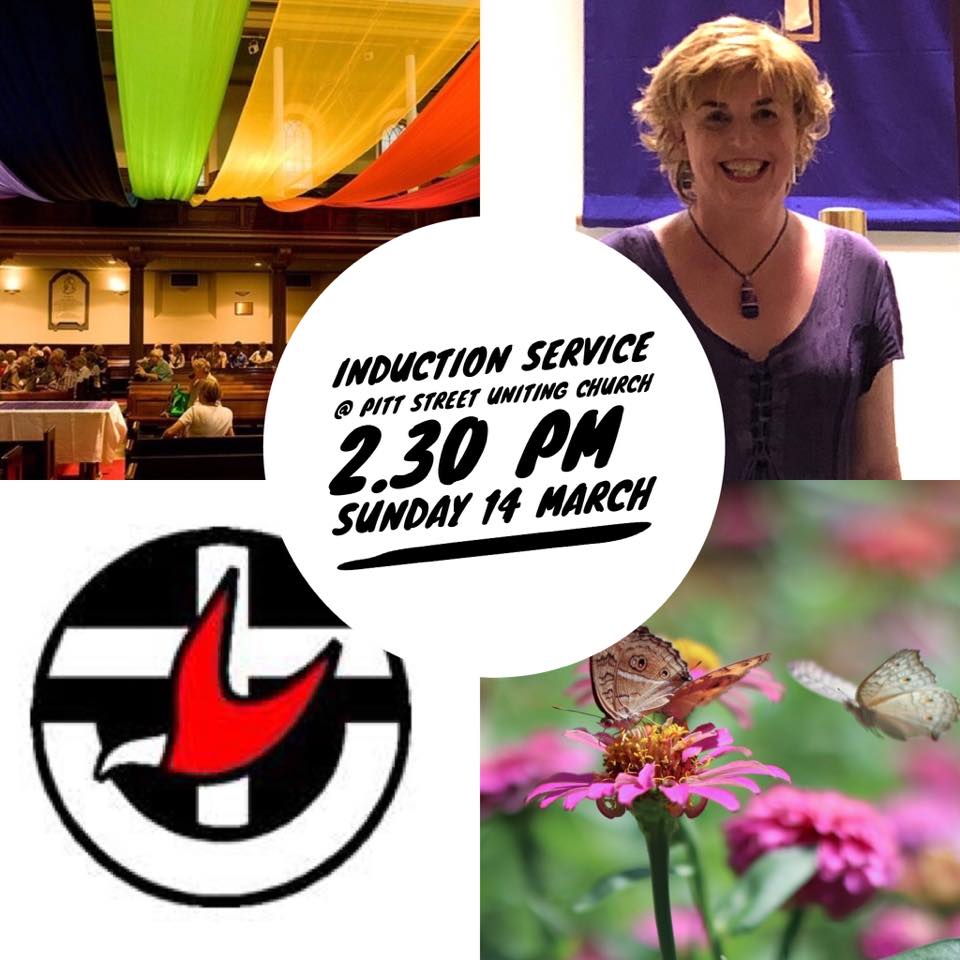 I have been quite moved this week - with all kinds of trans pride, past trauma and hope rising up - as the reality sinks into my body and consciousness that the Uniting Church makes a vital little bit of history this Sunday. For we hold the first ever Induction in a mainstream Australian Church of an openly transgender ordained person (as distinct from allowing someone to continue in an existing role after coming out) - and without all the cruel insistence on justifying trans existence so often present around us. Trans people do not need churchy validation, but, my God, as I know from others, it makes such a difference for so many journeys of affirmation and empowerment when pathways are opened. It is a huge tribute to those who have made the way - to trans and other queer people ourselves, and not least to those in the Pitt Street story who've created the ground for this and other things (not least my distinguished predecessors). Of course, this placement is about much, much more, but it is one significant aspect. There's a long way to go, but I'm so proud of the Uniting Church in this, and pray that it may be a contribution to the much needed changes in law, health, and education required to support gender diverse people who are currently under such attack (not least in New South Wales right now. I'm also thrilled to have so many different people attending, and messages of encouragement, from right across the Christian and community spectrum, and I know that what we share on Sunday is part of the broader changes coming into being also. May all people and their/our gifts flourish!
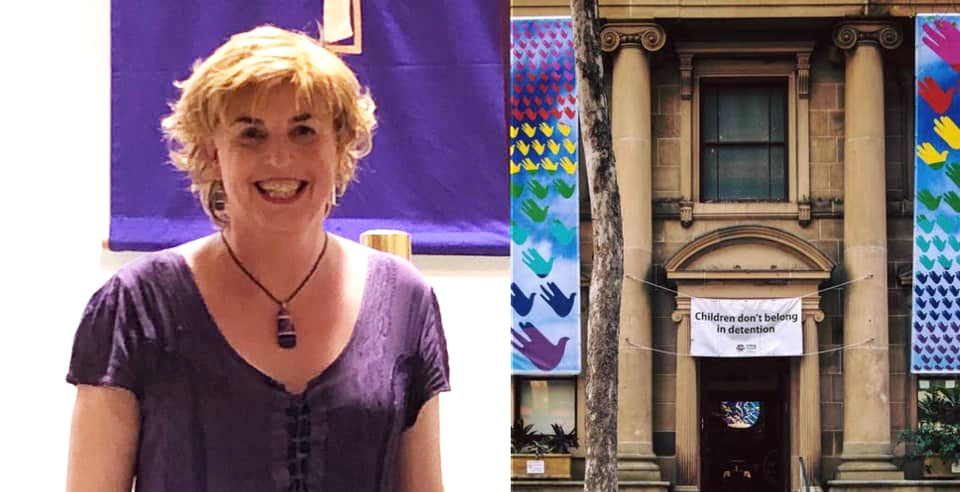 I've been warmly welcomed by members of the Uniting Church as I prepare to be inducted to ministry with Pitt Street Uniting Church in Sydney. Here below is Jonathan Foye's article for Insights (Uniting Synod NSW/ACT) - reproduced from the magazine here...
 I am deeply humbled and thrilled to announce that I am again being called to ministry in Sydney - as the next Minister of Pitt Street Uniting Church. This is a wonderful high profile progressive faith community which gathers on Gadigal land in the heart of Sydney’s CBD. After much reflection and careful discernment with the Uniting Church, Penny and I believe that this is the very best way in which I can serve with others in nurturing faith, love and hope in the next few years (from 1 March 2021) - as well as, very happily, being again close to family in Australia. I extend my thanks and blessings to all with whom I have journeyed in the past and to those I look forward to joining soon...
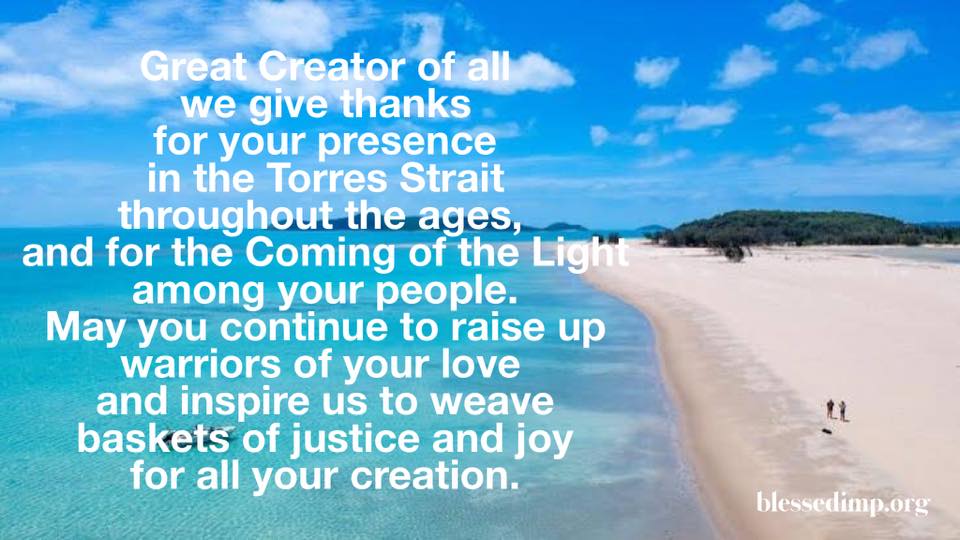 Above is a prayer I have written to mark the annual Coming of the Light festival (1 July) and for use of other occasions. It is shaped with thanks to Torres Strait Islanders with whom I have walked/continue to walk, with appreciation of their deep faith, spirituality and commitment to justice and diversity. Living strongly in my heart is also the visit, with NSW Ecumenical Council friends, which I paid several years ago to the Torres Strait. Torres Strait Islanders are often little known to many Australians, never mind the rest of the world, and literally and metaphorically missed off maps of the nation. Yet their history, culture and life today are rich and life-giving. They also continue to challenge us all to face up to the continuing effects of colonialism, injustice and climate change (which impacts on the Torres Strait so strongly). I am particularly grateful to walk paths of just Reconciliation with Aunty Rose Elu and the non-geographical Anglican Torres Strait Islander parish in Brisbane. May this year's Coming of the Light further enrich the people of the Torres Strait and deepen our solidarity.
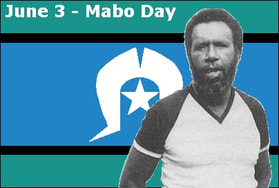 Today is an opportunity for everyone to rejoice in the great historic achievement of the Mabo campaign in reclaiming title to land and self-determination, toppling the monstrous British and white Australian fiction of ‘terra nullius’ - and to be inspired to address continuing injustices, not least those of enduring violence and dispossession borne of colonialism. This should truly be one of Australia’s great public holi(holy)days, not just another day, and its messages should be developed every day...
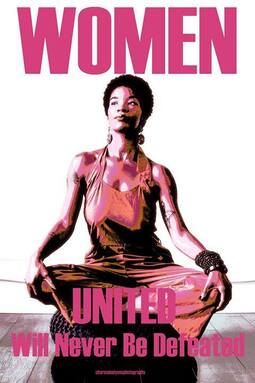 I'm so pleased for the talented Gympie photographer Charmaine Lyons that her first Women United exhibition was able to be held recently, at Gympie Regional Library, before COVID-19 spread here. The project has been focusing on sharing the photos, and stories, of 200 'ordinary, extraordinary' women from all walks of life in regional, or regionally connected, Australia. It was motivated by reaction to the White House photograph featuring President Trump signing off on an US 'global gag' on support for women's reproductive rights - original story here - and by the Women's Marches in the USA and worldwide. Charmaine's vision is about affirming those working for, and living out, a more just, sustainable and flourishing society and world for all - which is something we sure need to ponder and work for more actively in the future as the weaknesses of our profit-before-people economy & privilege-for-some culture are so exposed by COVID-19 right now. A book and - in time - more exhibitions elsewhere will follow (part of the positive creative expression which hopefully will be nurtured and curated in this bunkered dread season). Most of all however I just love the affirmation of diversity coming from regional Queensland (often despised elsewhere in Australia). It is such an encouraging example of empowerment wherever we may be: if Gympie can do this, why not elsewhere? With blessings to all creative spirits 🙏❤️ Here’s an 'official' film interview (Women United - an interview with Charmaine Lyons), hosted on Vimeo - by another talented Gympie creative spirit (Jazmyn of Jazmyn Produces) - sharing some of the aims, inspiration and photos (including one of me if you’re very attentive!).
 2020 promises to be something of a watershed year in the development of Anglicanism, both in Australia and internationally. For this year sees both an Australian General Synod meeting and the next Lambeth Conference, each of which look to be significant occasions in continuing Anglican 'culture wars', particularly in relation to the persistence of narrow ideological hang-ups towards sexually and gender diverse people. In addition, in Australia, the Anglican Church's Appellate Tribunal will rule on the legitimacy of two very mild steps taken by the dioceses of Wangaratta and Newcastle: respectively an agreed liturgy for blessings of those now able to be married under civil law under the marriage equality legislation now happily in place in Australia; and space for clergy in all such faithful relationships to able to use their gifts freely in recognised ministry in the Church, without fear of disciplinary action. Meanwhile, with proposed religious discrimination legislation before Federal Parliament, Anglican and other Churches will rightly come under further scrutiny for the degree of their collusion (and, in some cases, active leadership) with the continuing queerphobia and repression of LGBTIQA+ people in Australian society. Sadly, LGBTIQA+ Christian voices are typically restricted or denied in these developments, not least within Church debates themselves. Thankfully, like their counterparts overseas, Equal Voices Anglicans have been growing in strength and visibility, offering some hope and consolation in what will be a lengthy struggle for sanity and dignity. As this year unfolds, it is indeed hoped that fresh affirming expressions will be increasingly manifest. For the moment, on behalf of Equal Voices Anglicans, I offer a list of helpful resources for use, from both Australian and international sources: including You Tube and written stories, theology, small group study materials, and pastoral care resources - download here, or from the Equal Voices Anglican website here.
Oscar Romero, the great El Salvadorean archbishop and martyr, observed that the task of the Church in every generation is to make of that country’s history a history of salvation. This has always struck me strongly and I’ve been pondering it in relation to ANZAC Day and St George’s Day (the English national day) this week. As a saint, Oscar Romero’s feast day also falls appropriately between those two dates and challenges us to relate our national histories to that of Israel as described in the Bible. What can we learn?...
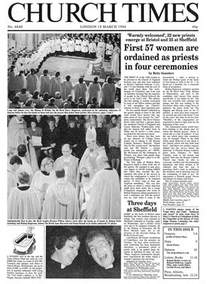 Jim Thompson. our lovable bishop who ordained me deacon in London's East End, used to say that not a week went by without him wondering why he was still in the Church, and yet not a day or two without experiencing something of the amazing gifts which come with being a priest. I thought of this when I was reminded this week of the 25th anniversary of the passing of the ordination of women measure in the Church of England's General Synod. Writing in the Church of England Newsletter this week, Emma Percy, Chair of WATCH (Women and the Church) in the UK, commented pertinently about the joys then, and the achievements and frustrations since. As she reflects:
It is now 25 years later, almost half of my life, and the young people I work with have never known a Church of England without women priests... (now) part of culture appearing in TV, adverts, novels; both fictional and real examples. Yet, tensions over the role of women still continue in the church... The debates around women bishops meant that the church’s continuing uncertainty about really welcoming women into all orders of ministry was played out for the wider world to see. Sadly, this means that many younger people think the church is out of step with gender equality. 25 years on I rejoice that the church has benefited, and continues to benefit, from the priestly ministry of so many women. I rejoice in the ministry I have been able to have. I hope that we can continue to encourage women to serve in this way and that the Church of England will find ways to truly celebrate the momentous decision made 25 years ago. Those are memories and reflections with which I concur. It is a mixed bag. Indeed, as my first grandchild comes to be baptised (in Christ Church Gosford) tomorrow, and in the wake of the Australian postal vote on marriage equality, it leaves me pondering: what will be the shape of the Church in another 25 years?... |
AuthorJo Inkpin is an Anglican priest serving as Minister of Pitt St Uniting Church in Sydney, a trans woman, theologian & justice activist. These are some of my reflections on life, spirit, and the search for peace, justice & sustainable creation. Archives
April 2024
Categories
All
|
 RSS Feed